We don鈥檛 need the fossil industry for a fossil-free future
As scientific director of the EIRES institute, Richard van de Sanden outlines how we can become less dependent on fossil fuels in the future.
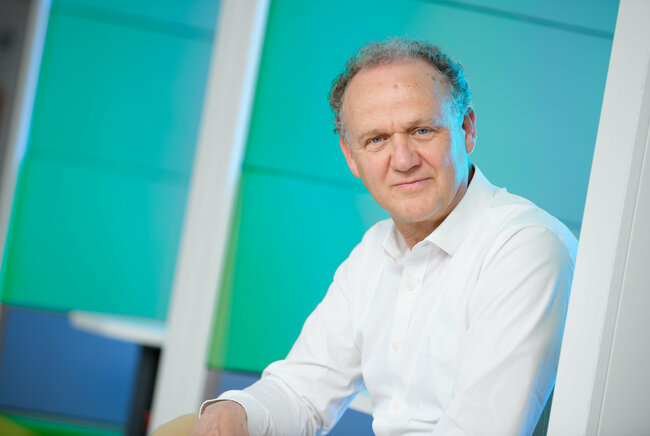
Richard van de Sanden thinks we are focusing on the wrong things when it comes to fossil fuels. The scientific director of EIRES, professor at the Department of Applied Physics & Science 果冻传媒 and group leader at DIFFER says the Netherlands has to reconsider what kind of country it wants to be. 鈥淲e will have to make different choices when it comes to industry, but we don鈥檛 need the fossil industry to get rid of fossil fuels. That鈥檚 a misconception that distracts attention from the debate we should be having.鈥�
What exactly are fossil projects? How far does the definition stretch, given that fossil fuels are part of almost everything around us, Van de Sanden points out. This makes for a sharp opening to the debate: 鈥淲e can鈥檛 banish fossil fuels from our lives just yet. Fossil components are everywhere: in our desk chairs, in our cars, in our paint.鈥�
鈥淏ut that doesn鈥檛 mean we need the fossil industry to get rid of fossil fuels. Those are two very different things that are often lumped together, which is why we鈥檙e still having the wrong debate as far as I鈥檓 concerned.鈥� Van de Sanden believes the question shouldn鈥檛 be whether we can stop using fossil fuels, but where we want to go and how we can get there.
Reconsider what kind of country we want to be
鈥淭here鈥檚 already a consensus on fossil fuels: we鈥檙e getting rid of them. But in which direction are we headed and what鈥檚 the industry of the future in the Netherlands? How will we make money as a country? Take slaughterhouses, greenhouses, and distribution centers: those are sectors we don鈥檛 want anymore.鈥�
鈥淢uch of our energy-intensive industry was founded on the back of cheap gas (at the time), which also applies to sectors such as horticulture. If green electricity, which is mainly generated decentrally, is to play a larger role in our energy supply, we鈥檒l have to think about what kind of industry and other commercial activity go with that.鈥�
I think we鈥檙e heading to a much more decentralized energy infrastructure. Now all that鈥檚 left is to make the transition to the decentralized user units.
Richard van de Sanden, 果冻传媒 professor and scientific director institute EIRES
鈥淚n any case, I think we鈥檙e heading to a much more decentralized energy infrastructure. You can see this, for instance, when you look at solar energy, with households having their own solar panels on the roof. Now all that鈥檚 left is to make the transition to the user side: from central energy generation to decentralized user units,鈥� is Van de Sanden鈥檚 conviction.
He doesn鈥檛 necessarily mean that everyone will have to purchase a home battery to store that power. According to recent news reports, these within their lifecycles and can only store a relatively small amount of energy.
鈥淏ut there are other steps that are worthwhile taking, such as converting solar energy to synthetic gas from green electricity, captured carbon dioxide, and water, and storing this for re-releasing heat and electricity in winter.鈥� The devices needed to this end are smaller and modular. A great number of these kinds of devices can ensure large-scale production, similar to what鈥檚 happening with solar and wind energy.
Less export
鈥淟ooking at the Netherlands, our greatest assets are the Port of Rotterdam and offshore wind, as well as the access to the European hinterland where many products are needed,鈥� Van de Sanden explains. 鈥淲e鈥檙e currently very focused on bulk chemistry, where we for instance produce many raw materials, such as polymers, for things like mattresses.鈥�
鈥淲e also produce a lot for export. This is mainly done in central places, including Chemelot in Geleen and the Port of Rotterdam. I think that in the future, we鈥檒l start concentrating more on much higher quality and much more decentralized production, dovetailing with wherever green electricity and other raw materials are available.鈥�
鈥淏ut that鈥檚 a switch neither the chemical sector nor the fossil industry will be making,鈥� he believes. 鈥淲e didn鈥檛 start using solar energy and wind turbines because of energy companies, electric cars because of the traditional car industry, or new types of batteries because of conventional battery factories. The new chemical industry will transition to much more decentralized production,鈥� he expects.
鈥淭he newcomers, which are working at a much smaller scale and in a modular way, might make a loss for years but they know that in the future this is the market to be in. Incidentally, if there鈥檚 anything we鈥檙e not short on, it鈥檚 money.鈥�
I think that in the future, we鈥檒l start concentrating more on much higher quality and much more decentralized production, dovetailing with wherever green electricity and other raw materials are available.
Richard van de Sanden
How do you make synthetic gas?
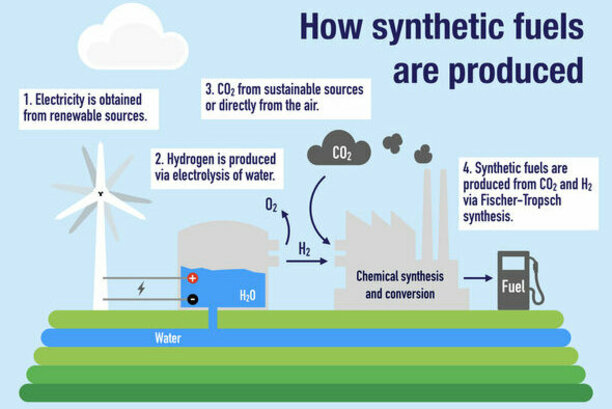
The idea is simple. In summer you use green electricity, captured carbon dioxide, and water to make synthetic methane gas (similar to the natural methane gas we use in our homes). You can make use of the gas network to store this synthetic gas in large caverns, which we currently use to store our winter stock.
In winter, you use synthetic gas to make heat and electricity again, for instance with the help of a fuel cell, cogeneration, and a heat grid. This could be implemented using small modular units, at the scale of many houses or a district for example.
鈥淭hese decentral solutions could tackle several problems we鈥檙e currently facing, such as grid congestion, because everything is arranged at the local level. These local energy hub concepts are garnering more and more support,鈥� Van de Sanden says
FROM GREEN POWER TO SYNTHETIC FUEL. ILLUSTRATION | DIMITRIOS KARAMITROS / ISTOCK
Discontinuing fossil subsidies
Van de Sanden thinks we shouldn鈥檛 hold on to the past too much. 鈥淚f we had never started using fossil fuels, and we had to remove everything involving fossil fuels from this room (his office, ed.), there would be nothing left. The paper industry, cement industry, plastic, they all still need fossil energy or fossil raw materials.鈥�
But what about discontinuing fossil subsidies to at least stop encouraging their use, and giving that money to sustainable decentralized projects for example? 鈥淎part from the fact that policy doesn鈥檛 allow discontinuing the subsidies with immediate effect 鈥� this would have to be done at the European level 鈥� we鈥檇 actually be shifting the problem.鈥�
鈥淚f we in the Netherlands were to discontinue everything today, those companies would continue in countries where they still get those benefits. So even if that made things much greener here, people elsewhere would be worse off.鈥�
Incidentally, Van de Sanden isn鈥檛 too concerned about job losses resulting from a decision to stop using fossil fuels. 鈥淭he loss of jobs could be compensated by new ones that will be sparked by the new industries, provided we set everything up properly. So we have to be diligent about ensuring that all of those people still have jobs if our industry undergoes a radical change in the future.鈥�
European collaboration
Van de Sanden likes to focus on making concrete improvements in the future rather than on fossil subsidies because he thinks the latter isn鈥檛 the most important aspect of the debate. 鈥淥f course, you need to discontinue what you can, as many subsidies lead to certain companies being here.鈥�
鈥淭hose subsidies mainly help bulk chemistry, which uses subsidized fossil energy to make raw materials that have way lower margins than high-value end products, hence the subsidies.鈥�
You can question whether in the future we should be lugging around both iron ore and water or if we should make European agreements on producing steel in, say, Sweden.
Richard van de Sanden
Van de Sanden sees the benefits of European collaboration in dividing up the necessary industry and locating it in places that make sense instead of in places with an advantageous tax climate. 鈥淭ake Tata, for instance, which produces steel. But its real value is the exceptional kinds of steel they make there.鈥�
鈥淓verything can be hot-rolled directly in the factory because they have good integration. But you can question whether in the future we should be lugging around both iron ore and water or if we should make European agreements on producing steel in, say, Sweden.鈥�
鈥淭here鈥檚 a lot of hydro energy and hydrogen production there, as well as iron ore, so maybe it鈥檚 better to produce steel there and make agreements about this. That will be more economically viable as well.鈥�
Just transition
When he says we 鈥榮houldn鈥檛 hold on to the past too much鈥�, Van de Sanden doesn鈥檛 mean that we must turn a blind eye to the damage inflicted by the fossil industry, for instance in the Global South. 鈥淭hat鈥檚 a separate debate. A just transition is very important of course. A prerequisite even. If we don鈥檛 do a good job in that respect, this will only result in greater unrest.鈥�
鈥淲hen referring to the past, I mean the things you see around you that were made with the help of cheap energy. The carbon is already in the air, and the items have already been produced. But we can do better in the future.鈥�
鈥淔or instance, a new wind turbine facility is being set up in Namibia. This means we have a choice between either sending people from here to work there or training locals. The latter is better for the country of course.鈥�
Energy industry of the future
鈥淭he most important point is that the fossil industry is organized centrally now, which is outdated, so if they don鈥檛 adapt that spells the end for them I think. I see a lot more room for much smaller chemical facilities, maybe even integrated into the built environment,鈥� he says, thinking out loud. 鈥淕enerating is already more decentralized. Now demand also must be organized that way, also to solve grid congestion.鈥�
鈥淚n principle, we have everything we need to get started but now we have to use it and come up with the best way to spread it. In this respect, standardization is super important to really speed up things in what is known as the modular approach,鈥� Van de Sanden says.
Standardization is super important to really speed up things in what is known as the modular approach.
Richard van de Sanden
鈥淭ake wind turbines that are getting bigger and bigger. Suppliers and maintainers constantly need to re-adapt to this, which takes time and money. With solar panels, this process has already been finalized: they are using cells of 60 by 120 centimeters and cells of 15 by 15 centimeters.鈥�
鈥淔or decentralized chemistry making platform molecules we don鈥檛 have such units yet. We are yet to determine the scalable unit. If it鈥檚 1 megawatt, we鈥檒l need 300 houses per decentralized unit in the built environment. If we settle on 10 megawatts, we鈥檒l need 3000 houses. This is key for the way you scale it and, by extension, for rapid wide implementation and cheap procurement.鈥�
Fossil companies not required for cleaner future
Van de Sanden: 鈥淲e still need the fossil chains right now, but to change the chains we have to start focusing on a new and improved future. I鈥檓 on several advisory committees and I鈥檓 happy to report decentralization is being put on more and more political (and other) agendas.鈥�
He thinks it makes sense that it鈥檚 mainly small parties involved in the production of our materials and chemicals that will eventually lead us away from fossil fuels.
鈥淭he interests of old and new companies differ and that鈥檚 what a parallel development like this one often comes down to. So I have a hard time believing those who say we need the fossil industry to create a more sustainable future. Getting rid of fossil fuels now is a pipe dream, but you probably won鈥檛 need those companies to bring about fossil-free production of, say, synthetic fuels.鈥�
More on Sustainability


Latest news
![[Translate to English:]](https://assets.w3.tue.nl/w/fileadmin/_processed_/2/2/csm_Banner%20image%20Jaap%20van%20der%20Aar_4650434764.jpg "[Translate to English:]")

